Pirate ships were incredibly dangerous places to be even in the best of times. Men were isolated from civilization; totally at the mercy of the elements. The weather could turn treacherous in an instant, fights were common, proper nutrition was impossible, and the hygienic standards deplorable. All that said, pirates did try, despite all odds, to stay alive. The tough lifestyle took a toll and many of the men on such crews died young. During the Golden Age of Piracy (C. 1650-1720) if the sword or the sea didn’t kill a man, scurvy would.

Medical Professions Wanted:
Not all ships had trained surgeons. Some men that served in such positions were given the responsibility simply because they could read and write. Unfortunately, many labels were in Latin, so their ability to read was little help to them. Primary source materials reveal that a large number of doctors were obtained via force. A traveling doctor’s ship would get captured, and he was ordered to serve the crew for a length of time to gain his freedom. Most of the time, doctors had limited resources available to them, only adding to the difficulty of their job. Medicine chests containing various tools, manuals, and tinctures were highly valued and expensive to obtain. Ships that did not have medicine chests had little to work with and made due with prayers and whatever nonmedical tools they could get their hands on.
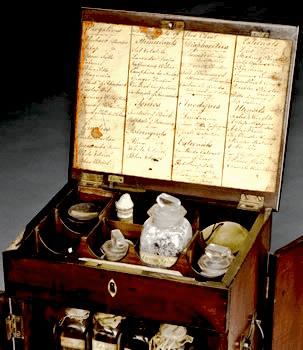
A great website if you want to learn more about various tools and procedures!
Syphilis, Amputations, & Peg Legs:
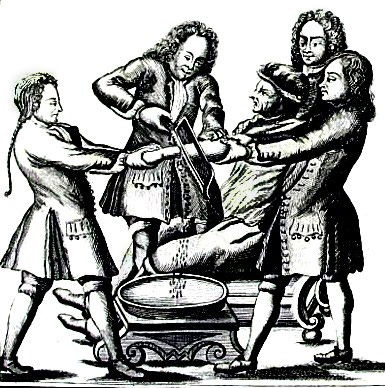
Many pirates, having embraced debauchery while ashore, contracted syphilis. Urethral syringes could be found in more advanced medical chests, as they allowed for an injection of mercury. Left untreated, syphilis causes limb loss and skin decay. If an amputation had to take place, cooks and carpenters often took up the role if a surgeon was unavailable. Amputations were not uncommon in this line of work. Due to unhygienic conditions, even the smallest of cuts could become gangrenous, requiring the limb to be removed before infection could spread. Most men who had limbs amputated obtained some sort of prosthetic. Peg legs and metal hooks are common depictions of pirates because such prostheses would have been available on a ship. Peg legs were common in antiquity and were not just utilized by pirates. It is also important to note that the work on the surgeon, whether experienced or not, was further challenged by the motion of the ship and the lack of painkillers. Complications due to infection were likely.
Nutrition and Tooth Decay:
Most pirates ate a diet consisting of hardtack and dried meat with wine. Fresh fruits and vegetables were rare because they rot quickly. As a result, many men contracted scurvy. Dental hygiene was also nonexistent. Some men chewed on sticks as a means of cleaning their teeth, but that was about it. As one can imagine, many men had infected gums and suffered from tooth loss.
A sea surgeon named William Cloves provided a glimpse of dental conditions in one of his journal entries, “…the gums would be rotted even to the very roots of their teeth, the cheeks would become hard and swollen, the breath would become pungent and finally the teeth would loosen and fall out.”

Eye Patches:
Hollywood depicts one-eyed pirates that wear eye patches to hide their empty eye sockets or unsightly scars. Another theory has come up in recent years about why pirates wore eye patches, and it makes a lot of sense. The theory suggests that men wore an eye patch as a means of keeping an eye dark-adapted. They protected one eye from the bright sun while on the top deck and then switched the patch to the other eye when they went below deck where it was very dark. The crew would have been moving from top deck to below deck frequently, thus explaining why they didn’t want to wait for their eyes to adjust each time.

The life of a pirate was a difficult one. Violence, loneliness, sickness, and exhaustion just came with the territory. Ships did what they could to keep their crews healthy, but the task proved challenging.
I’m going to go brush my teeth now
If that didn’t make you thankful for modern medicine, I don’t know what will!
Check out one of my other posts HERE… if you dare!
Until Next Time
N.F.

 Antiquated Antidotes