Prior to the microscope, people could only make guesses regarding the process of reproduction. For example, famous philosopher, Aristotle, thought that male “semen” and female menstrual blood combined to create spontaneous conception. He thought that men provided the form, and women the matter to create the child. Many people throughout history saw reproduction as being divinely assisted and mysterious. Thanks to one man with a custom-made microscope, one of the mysteries to human reproduction was revealed.
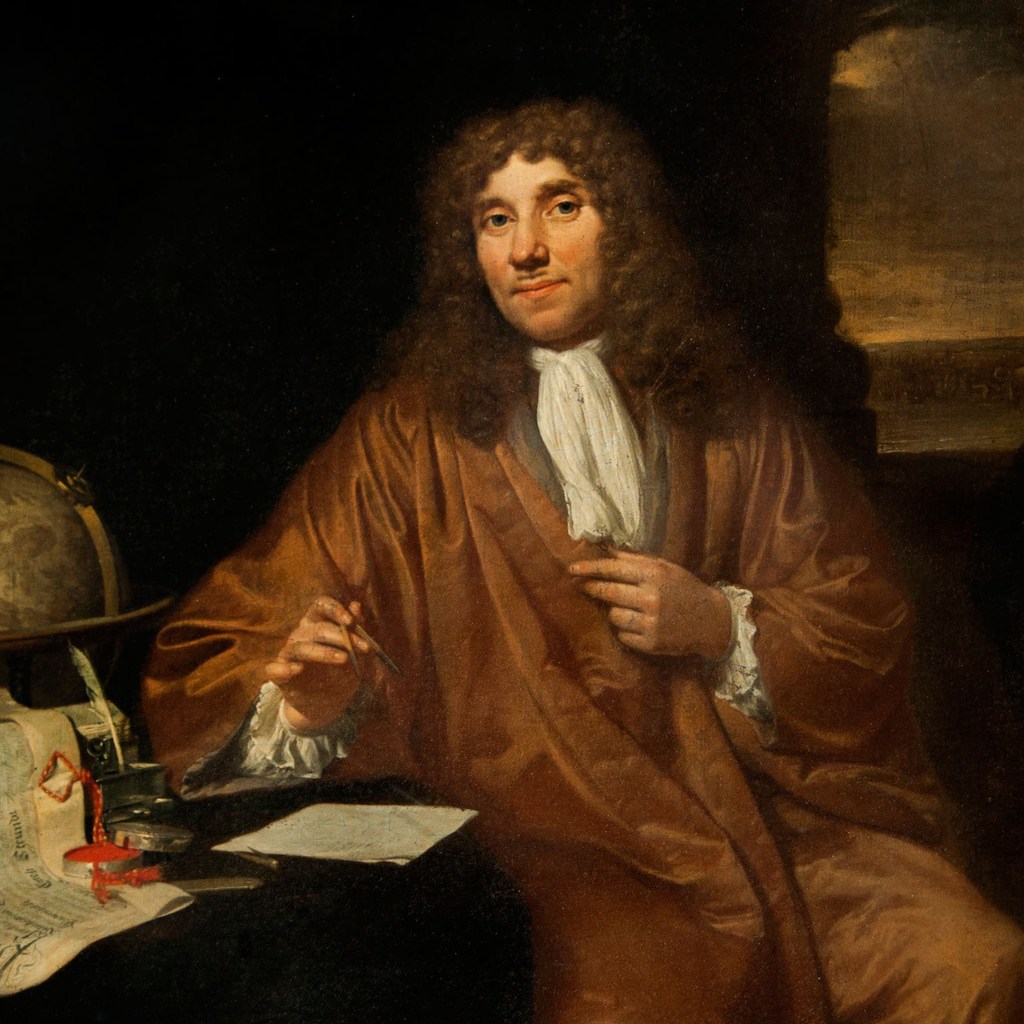
In 1678, Dutch draper and self-taught microscopist, Anton Philips van Leeuwenhoek, examined human semen under his strong lens. To his surprise, he witnessed tiny wiggling forms that he called, “animalcules” (little animals). At first, he believed the creatures to be some sort of parasite. After some time, he concluded that the large head of the spermatozoa contained a tiny, fully formed human inside. These tiny humans inside of reproductive systems were named “homunculi.” He believed that the baby just continued to grow larger throughout the pregnancy. As scientists studied the process of development in animals, it became clear that animals do not begin their fetal development in a near final form like previously thought.
“Man comes not from an egg but from an animalcule that is found in male sperm,” and added “For my part, I would say that the male sperm and seeds of plants have been penetrated so far that there is nothing further to discover in this great secret, but I could err in my opinion.”
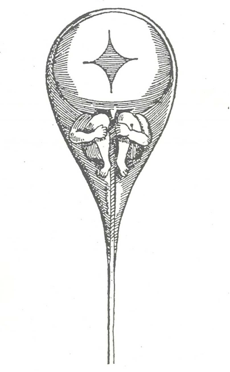
At first, he was hesitant to share his discovery, embarrassed by the private nature of his specimens. Eventually, he did report his findings to the Royal Society, where they were formally published. His discovery debunked spontaneous generation, proving that life originated in reproductive systems. Some scientists disagreed with his theory that the head of the sperm contained a homunculus, or tiny, fully formed human. Instead, some believed that an embryo formed after some combination between male and female reproductive systems. Of course, now we understand that the sperm contains 23 chromosomes, which combine with the 23 chromosomes in a female egg. Those chromosomes carry genetic coding from each parent that forms the child. His discovery laid the groundwork for modern reproduction biology. His great work with a microscope all started through his desire to view the threads of materials up close. My, how much more he accomplished!
“What I investigate is only what, without sinfully defiling myself, remains as a residue after conjugal coitus. And if your Lordship should consider that these observations may disgust or scandalize the learned, I earnestly beg your Lordship to regard them as private and to publish or destroy them as your Lordship thinks fit.”
Until Next Time
N.G.
Refrences:
Pickover, Clifford. The Medical Book: From Witch Doctors to Robot Surgeons, 250 Milestones in the History of Medicine. Sterling; New York, 2012. Print.

 Antiquated Antidotes