Beautiful Rosemary Kennedy was born in 1918 as the first daughter and third child to Rose Fitzgerald and Joseph P. Kennedy Sr. It was during this time that the nation was struggling with the Spanish influenza, which would claim the lives of 105 million people worldwide. Due to the influenza, Rose’s doctor was not immediately available, forcing the residing nurse to take over. The nurse ordered Rose to tightly close her legs and resist pushing until the doctor arrived. After waiting in the birth canal, potentially deprived of oxygen for two hours, Rosemary made her entrance into the world. Her parents described her as a quiet baby that did not often cry. As their daughter developed, they began to suspect something might be wrong.
According to Rose Kennedy, “She was slow in everything, and in some things she seemed unable to learn how to do, or do well or with consistency. When she was old enough for childish sports, I noticed, for instance, that she couldn’t steer her sled. when she was old enough to learn a little reading and writing, the letters and words were extremely difficult for her, and instead of writing from left to right on a page, she wrote in the opposite direction.”
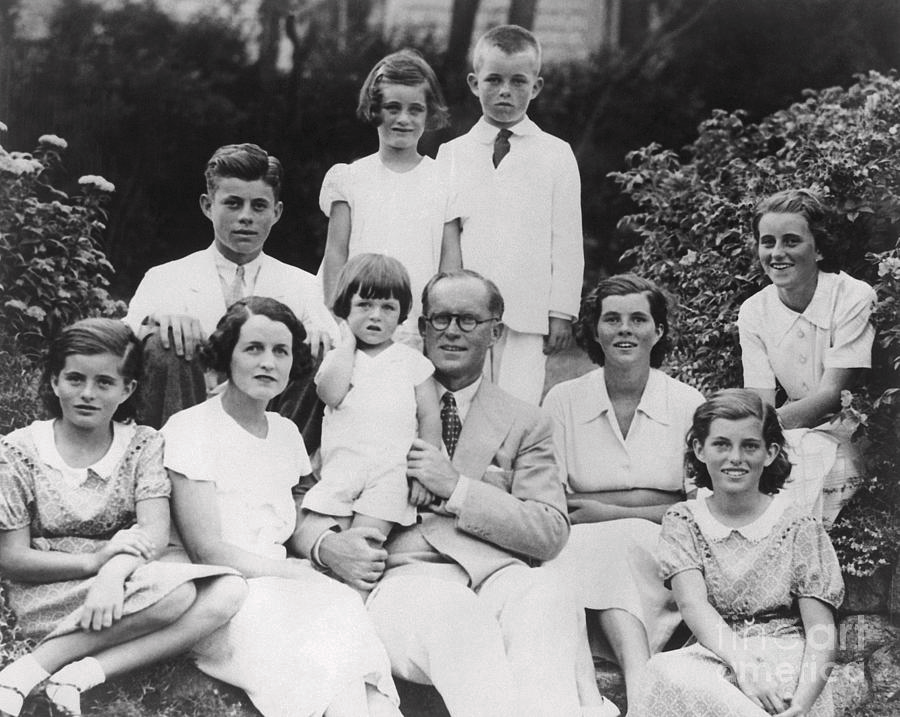
Over the next twelve years, the family continued to expand, and six more siblings were born. At first, rosemary was sent to a local public school, but after failing to move beyond kindergarten twice, Rose and Joe sought out a professional medical opinion. Tests were conducted at the Psychology Department at Harvard University and doctors concluded that Rosemary was classified as mentally retarded (Retarded was a commonly used medical term at the time. Today, intellectually disabled is the preferred terminology. The label is used in the post when it is applicable to the time period being discussed.) The parents were shocked by the diagnosis, but they wanted to try to have Rosemary lead as normal of a life as possible. Rose and Joe explained to the older children that Rosemary was a little slower and needed more help and patience than the other children. Everyone pitched in to make Rosemary feel loved and included during childhood. Rose worked with Rosemary at home from 8 until the age of 16. For the next two years she would attend Elmhurst Sacred Heart Convent and be taught by nuns. Once her progress slowed, she again was schooled at home by her mother and tutors. As Rosemary got older, she began questioning why she was treated differently from the rest of her siblings. Why were her younger sisters able to go out when she couldn’t? Rosemary began throwing tantrums, making escape attempts, and screaming out while rolling and kicking on the ground. Where had the quiet Rosemary gone?
In 1938, President Franklin D. Roosevelt appointed Joseph Kennedy to be the United States Ambassador to England. The family instantly gained international attention. Rosemary loved her time in Europe and found work at a Montessori school with young children. When Hitler seemed intent on invading England by 1940, her family brought her home to the United States. The transition was extraordinarily difficult on Rosemary and her family because she began having angry outbursts that were sometimes violent. In the fall of 1940, she was enlisted as a student at a convent school in Washington, D.C. At night, Rosemary snuck out of her room by climbing out the windowsill. It was discovered that she had been sneaking out to meet men at local taverns. Joe Kennedy was horrified to discover that his daughter was sneaking around at night to be with young men. Rosemary was beautiful, young, and naive. Her father did not want Rosemary to be taken advantage of, nor did he want the family’s reputation tarnished by an unwanted pregnancy or sex scandal. After several more violent outbursts and seizures, Joe began searching for new possible treatments. He had informed Rose and their daughter, Kathleen, about a new surgical technique called the prefrontal lobotomy. After conducting more research, the family decided they did not wish to proceed with the procedure. At least, Kathleen and Rose thought that the matter was closed.
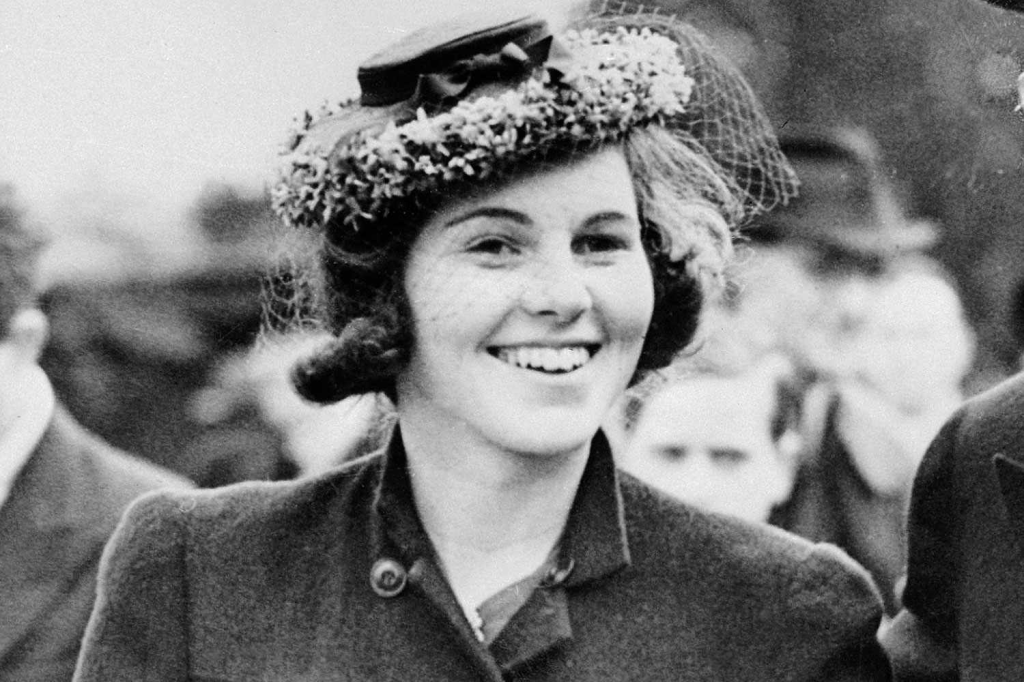
In 1941, unbeknownst to the rest of the family, Joe Kennedy took Rosemary to George Washington University. After being examined, Dr. George Freeman assured Joe that he believed a prefrontal lobotomy to be exactly the treatment needed for his daughter. Lobotomies in the 1930s saw a rise in the popularity. They became known as a quick fix for people suffering from a variety of mental disorders. Early renditions of the surgery involved a leucotome, a needle-like apparatus being inserted into holes drilled into the front of the skull. Later, Freeman developed the well-known transorbital lobotomy technique where the prefrontal cortex is severed using an ice pick that is inserted into the upper eye socket. If you are interested in reading a more in-depth history on the lobotomy, you can check out another post of mine HERE. Rosemary was numbed with Novocain and given a mild sedative. This meant that she was awake during the procedure and could communicate with doctors, but she could not feel pain. Rosemary was reclined on the surgical table, and two holes were drilled into her head. The doctor slid a long, thin needle into her brain and twisted upward. After the procedure, Rosemary was never the same.
With the part of the brain that controls executive function catastrophically damaged, Rosemary became unable to walk, speak, or go to the bathroom on her own. Her intelligence seemed suddenly reduced to that of a two-year-old. Joe had Rosemary institutionalized almost immediately. She spent her first years in a private psychiatric hospital before being moved to Jefferson, Wisconsin’s St. Coletta School for Exceptional Children, where she spent the remainder of her life. Her family was told that her condition had worsened and that visits were impossible because doctors believed that outside visitors would disrupt and disturb her. It wasn’t until roughly twenty years later that Joe Kennedy suffered from a stroke that left him wheelchair bound and unable to speak. The hospital, being unable to communicate with him, contacted Rose. Some people believe that Joe had the lobotomy performed in the hopes of stopping the poor behaviors that could ruin the Kennedy name. Once the procedure went south, some argue that Joe had her locked away in an institution to hide his guilt. Others offer Joe grace by arguing that he had the procedure performed against family wishes because he truly believed it was the best option at giving his daughter a peaceful and productive life. After the family discovered the secret, they began trying to make up for lost time by regularly visiting Rosemary and advocating for the rights of mentally ill individuals.
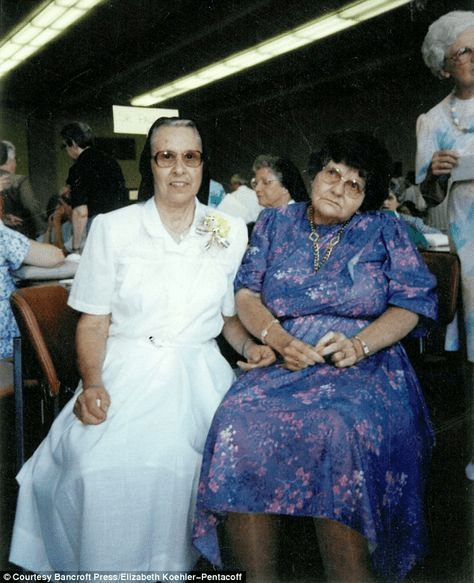
Rosemary eventually learned to walk again, but she struggled with communicating clearly and lacked mobility in her hands due to palsy. Despite the challenges she faced, Rosemary is remembered as a spunky, kindhearted woman that loved her family and friends, dog, and swimming. She died at the age of 86 from natural causes. Her life inspired her family to advocate for people with mental disabilities. Her sister, Eunice, founded the Special Olympics which continues to provide children and adults with opportunities to participate in physical competitions annually. The family also created the President’s Panel on Mental Retardation which helped provide legislation that instituted state grants to intellectual disability programs and centers. The legacy and lessons behind Rosemary Kennedy’s life live on today. Although she was hidden away for a long time, her family found their way back to her. She is just one example of the countless souls that struggled with mental illness and the stigma surrounding it.
Until Next time
N.G.
Refrences:
Koehler-Pentacoff, E. (2015). The missing Kennedy: Rosemary Kennedy and the secret bonds of four women. Bancroft Press.

 Antiquated Antidotes